“. . . AND YOU’LL WANT TO RENT a car with that, correct?” AMTC’s travel agent asked from the other end of the line.
Larry was glad the company at least used a good travel agent. Yeah, he probably shouldn’t be using them for personal arrangements, but, hey, he’d work it out with the HR accountant when he got back . . . if he remembered. Or maybe he could just say he’s got a potential client down there. The way they operate around here, they’ll be none the wiser.
The next three weeks seemed to fly by—probably because he actually had something to look forward to, which hadn’t been true for a long, long time. Sheesh, what a lousy life he’d let himself fall into, he thought as he munched his PB&J in front of his screen during his so-called “lunch hour.” A job that was going nowhere fast in a field he’d never thought he’d be in, much less had prepared for. And, yes, Julia was a great wife most of the time, but . . . well . . . things were a little routine there too. He’d given up dreaming of the type of relationship he really wanted. He felt like a fool even to think about it in the privacy of his own mind. Mostly, he just wished for something different from what he had now. And this trip was going to be so worth it, even if it killed him.
On his final day at work before his time off, he felt so glad to turn on his out-of-office notice on his email and voicemail. Two whole weeks off! With the weekends tacked onto both ends. Larry’s plan was brilliant! He also secretly hoped some huge fiasco would happen at his office while he was gone—something not of his making or that could even remotely be blamed on him, though he knew how expertly the blame game was played in that company. He’d probably be screwed either way. But, hey, he needed to put that out of his mind. The next stop was Albany International Airport!
* * *
The morning of Larry’s flight arrived with thick, overcast skies, and the mood inside the Carter house reflected the weather. He was up early, carefully stacking his newly purchased fishing gear and duffel bag by the door. Julia stayed in bed as long as she could; she had a later shift today. Larry was perceptive enough to realize that her work schedule wasn’t the only reason she stayed sequestered in the bedroom.
The taxi was late, and they finally couldn’t avoid meeting in the kitchen.
“Good morning,” Larry said sheepishly.
“Morning,” Julia mumbled, reaching for the coffeemaker.
He could tell that, to her, this was just another workday. She had her green scrubs on, her badge on a lanyard around her neck, as she slapped together a lunch for her shift. His leaving was only a minor distraction—maybe she was looking forward to it … maybe she’d be free to sow some wild oats with someone else. Larry had been entertaining these crazy thoughts that she was having an affair, though he had no evidence at all.
When Julia finally turned in his direction, it was only to reach for her phone, charging on the counter.
“Well,” Larry started. “I have the car rented for two weeks . . . ” He was fishing for some kind of response.
“Uh-huh.” The phone glowed blue on her face in the predawn kitchen light as she checked her email for any last-minute changes in her work schedule.
“And I have a ride already scheduled from the airport when I get back …”
Still silence.
He turned slowly, moved to the door, and peered outside. The cab was really late. Today of all days.
* * *
After what seemed like the longest thirty-minute cab ride in his life—from the last sight of his wife standing stiffly in the front hall of their bungalow to the red-brick facade, circular windows, and glass canopies of the Albany airport—the driver finally dropped Larry at the terminal. Its famous galleries featuring works of artists in New York’s Capital Region were totally wasted on him this morning. His mind was suspended between the estrangement at home and the new—albeit temporary—world he was headed toward. Or should he say escaping to?
As he dragged his stuff through the concourse, past the colorful murals, and under the hanging sculptures, he wondered why he had packed so many supplies on this end when he knew he could get them much cheaper down there. But he admitted he was as excited as a kid about this trip, and that had overridden his usual thriftiness. Anyway, it just meant a bigger tip for the taxi driver and more baggage fees for the airline, he supposed.
The plane was small, with only about fifty seats. But that allowed quick boarding; the captain himself even helped Larry with his luggage. Before long, Larry was snuggled into the window seat for a nice airborne nap.
* * *
“Please return to your seats with your seatbelts securely fastened. We will be beginning our descent into Knoxville shortly,” came the muffled voice through Larry’s recently purchased noise-canceling headphones. He had heard how loud these short-hop regional jets—“puddle jumpers”—could be, and the rumors turned out to be 100-percent true.
After his snooze. Larry felt like he was already a world away from his desk, his wife, his life. Thankfully, though it was a four-hour flight, including a layover in Charlotte, in a rather cramped seat with minimal in-flight service, the trip was “uneventful”—a word every flier longs to say.
Knoxville’s McGhee Tyson Airport was even smaller than Albany’s, so it took Larry no time to get his rental car. It was a late model full-size SUV—adequate for the amount of stuff he had just lugged across the tarmac. He probably looked like a real greenhorn to the natives as he drove off the lot with the windows open, but he really didn’t care anymore. The fresh mountain air was already blowing through his hair . . . and his psyche.
Being a bit on the anal side, Larry had preloaded his phone with all the addresses he might need while out in the middle of nowhere, figuring that there’d be no way he’d get an actual cell signal once he got into the woods. At least that way he could still navigate using the preloaded maps and GPS since it would work even without a signal. The salesman at the sporting goods store had told Larry that he might want to think about going to an electronics store to buy a satellite phone if he wasn’t going to be able to connect to any cell towers, just in case of an emergency. Larry had thanked the guy but then didn’t explore it further, as he didn’t want to spend any more money.
So he got out his phone and set the GPS for Sikeston, Tennessee. West on I-40, across the scenic Tennessee River—a sight prettier than the stretch of the Hudson that ran past his plant—and he was on his way. Like a butterfly leaving its chrysalis.
His biggest decision now was whether to go straight to the cabin or hit the outdoors store first. He looked at his watch. The day was quickly disappearing. Better locate the cabin first. There’d be enough time tomorrow to stock the larder.
* * *
It was almost nightfall when the SUV hit the last bump at the end of the winding dirt driveway. The numbered rural mailbox was barely visible off of the highway, but the GPS had gotten it right, even out here in the boonies. “In Google we trust,” Larry said to himself, laughing as he got out of the car. A red-winged blackbird chortled in agreement in a sumac bush nearby.
He checked his phone and saw that he had no signal at all—not even roaming coverage for an emergency call. Thank goodness he’d preloaded all those addresses ahead of time. But then Larry wondered what would happen if he needed to make an emergency call. Eh . . . I’m just doing a little fishing. What could happen?
Larry looked around and considered that he might have had a more complete wilderness experience if he was in the woods of Canada or the jungles of the Amazon, but deep down, he wondered whether he—a pale-skinned pricing analyst from Albany—would really have been up for that. Otherwise, he was afraid he’d never get back to his “real” life—if he really wanted to. His fantasies were starting to run wild about disappearing off the grid and wondering whether anyone would even notice and come looking for him.
Though the Sikeston area had been predominantly farmland, the environment around the shack was wooded as far as the eye could see and the ear could hear. And that’s what Larry liked. No cars, trucks, trains, airplanes, or neighbors for miles around. It felt like a cleansing.
He looked up the short slope to the shack, shrouded in dusky light. It was a ramshackle little place with windfall branches and firewood strewn about the yard. A couple of old tires leaned against one corner of the building. A johnboat bridged two crippled old sawhorses, canted just enough to display the boat’s rotted bottom, its frayed painter line blowing listlessly in the breeze. Farther on, weeds grew nearly waist-high on both sides of the front door.
Just the way he imagined it!
Larry went around the back of the car, popped the hatch, and grabbed his stuff. He pulled a flashlight from the side pocket of his duffel and headed for the door. Once inside, he lit a kerosene lamp hanging from a bent nail hammered into an overhead beam. After wiping the cobwebs and soot from the chimney glass, he saw in its dim glow a rusted iron bed with a musty camp mattress, an early-model gas stove, and a drainboard with a pump handle at one end. Can you get Montezuma’s revenge in Tennessee? . . . Probably should have packed some bottled water, Larry mused.
Against the back wall stood some dusty shelves populated with old coffee tins, an oil can or two, and some mason jars with long-missing lids. Insect-crusted flypaper hung in the corner, waiting to crumble to dust with the slightest breeze.
He piled his stuff in the corner, then tipped the mattress on its side and proceeded to beat some of the dust out of it with an old landing net he found leaning between the exposed wall studs nearby. He laid the mattress back down and spread his bedroll over it. Before he knew it, he was staring sleepily at the ceiling, noticing a few stars peeking through the cracks. Within moments, the sound of snoring filled Larry’s newfound woodland retreat.
* * *
Morning came early between the trees and through the waxy windows, but he didn’t begrudge the wakening light as he would have at home. For one thing, he didn’t need—or even bring—an alarm clock. The woods were working their magic already, he figured. Birds greeted the dawn in numbers he hadn’t even known existed, with songs and calls he’d never heard before. Well, what would a city boy know about birdcalls? Pigeon coos and sparrow chirps were about the extent of his ornithological repertoire.
In seconds, his bare feet hit the dusty wooden floor. He wanted to get a quick breakfast and scout out the surrounding territory, then he would head back into town—if you could call it a town—for food and supplies.
The travel website had said there was a bass stream about a quarter mile down the slope from his shack. Sequatchie Creek, it was called. Since Larry was a kid, he loved those Indian names; they always sounded like adventure. The setting sounded custom-made. He began throwing together some trail mix and unpacking his jeans and hiking boots. In five more minutes, the green-flaking screen door was slamming behind him, and he was making his way carefully across the rocky meadow toward the downhill woods.
Halfway down, he stopped. He realized it was quiet enough that—except for the birds—he could hear the gurgling whitewater of the creek before he had even glimpsed it, sparkling through the trees. He stood for a while, just absorbing it all. It had been way too long since he felt like this. He could breathe again. That was the only way he could describe it. It was an atmosphere where sight, sound, and even smell merged into one sense. He realized that, without knowing it, his whole body had been hungering for such a feeling for a long, long time.
He continued his approach to the stream, stepping over a number of rotting, moss-covered logs as he went. He recalled learning that practice—stepping over instead of on—in Boy Scouts. Again, so many years ago.
Finally he reached the water. He steadied himself against the bole of an ancient oak.
The scene seemed primeval. All he could see: water, rocks, trees, and sky. All he could hear: birds, the tantalizing voice of the river, the wind through the leaves, and an occasional bullfrog thrumming a bass line. He thought he had died and gone to heaven—if he had believed in heaven. Sentiments like that were always tempting at moments like these, but his educated side stifled them immediately. Like intellectual whack-a-mole.
That cool stream before him would be his earthbound paradise, at least for the foreseeable future. He stood a few moments longer, soaking in the dappled sunshine and swatting at a few deerflies. Then he turned, reluctantly, and scanned his return path back up the hill, through the ancient trees, and to the cabin so that he could plan his day.
* * *
Larry got back up to his SUV and reached for the door handle. Then he remembered he didn’t lock the front door of the cabin. Wait. Didn’t lock the front door? Out here? What was he thinking?
He smiled, got in, and turned the ignition. Sitting there, he remembered he’d found a listing for a place called “Pop’s Tackle Box” on the main road just this side of town—and he’d even preloaded the address into his phone. So he punched it in on his GPS, and off he went once it pulled up the route.
In less than an hour, Larry heard, “Your destination is on the left.” Pop’s Tackle Box was a tiny storefront wedged between a sports bar and a nail salon/tattoo parlor in a small cement-block strip mall on the main road just leaving Sikeston. He would have missed it if it weren’t for the rusted portable marquee sign with the slide-in letters up next to the road. Larry spotted brackets on the roof where a permanent sign might have been, but they were long empty—from damage or neglect.
He pulled into a spot in front of the store. The lot was empty except for one old pickup covered with more primer than paint. Probably Pop’s truck. It appeared no one was getting manicured or inked this early in the morning. It looked like a modern ghost town. To complete the picture, a hawk called overhead just as Larry crossed the lot. He sniffed to himself and walked to the door. A string of little bells jingled against the inside aluminum jamb as he swung the door open.
It was about two-thirds lit inside. Overhead, fluorescent tubes were either burned out or missing. He walked hesitantly toward the back of the store, linoleum crackling under his boots.
“Hello,” he called, glancing between the aisles.
Silence.
“Hello!”—a little louder this time.
He heard a shuffling sound to his right from below a glass counter filled with spinning reels.
“Morning,” a man said, grunting to his feet as he slid closed the back of the display case he was just tending. With the side of his foot, he pushed aside a half-full box of new reels. “What can I do for ya?”
Larry started for a moment, not only from the sudden appearance of the man from below the counter but also from the uncanny resemblance he had to his own father . . . from his posture—leaning slightly to one side as he spoke—to his gray bushy eyebrows and crooked canine teeth as he squinted questioningly in Larry’s direction.
After a moment of uncomfortable hesitation, the storekeeper repeated, “Can I help you?”
“Oh, I’m sorry. For a moment there, you reminded me of someone.”
The man smiled. “Hope someone respectable.”
“Yes. I mean, yes, actually . . . my father—you really looked like my father there for a second.”
“Oh, okay. Well, I guess people do tend to look like other people sometimes. You new in town?”
Larry nodded. “Yep. Down for some fishing. Getting some time away from . . . ” He didn’t know why he was sharing with this perfect stranger, but the similarity to his dad was strangely loosening his tongue.
“Good for you! So you’re in need of some gear, then? What are you going after?”
“I, uh, what? Oh, what fish, you mean? Yeah, well, uh … bass, I guess. I brought my dad’s old fly rod and reel.”
“Okay, then you’ll be needing some dry flies … like these Royal Wulffs that imitate large mayflies.” He walked down the aisle, glancing up and down. “Them bass, especially smallmouth, tend to feed on insects right under the surface, so you can catch them using your basic nymphing techniques, dead-drifting ’em like you would with trout.” He stopped and thought for a moment.
Larry was really starting to feel like a kid again, listening to his dad go on and on.
“Then, because bass are your apex predators, streamer fishing works good on ’em. Both small and largemouths. Here we got your Woolly Buggers—I like these big ones with the rubber legs. Oh, and the Muddler Minnows, Zonkers, and of course your Clouser Minnows.”
Larry’s hands were filling up quickly. He should have grabbed a basket.
“Almost forgot the crayfish. They sure do love their crayfish. You got your Slumpbusters, your NearNuffs, and . . . where are they now? . . . oh, here, your Duane Hada’s Creek Crawlers.”
Larry was starting to think he was being taught another language. He felt totally out of his element but said, “Okay, thanks, uh . . . Pops,” Larry said, trying not to drop his haul of plastic-wrapped treasures. He had no idea what this all would come to but was glad he had cleared off his credit card before the trip.
“And a fresh spool of your basic seven-weight line, though you’ll probably want some eight or nine for where the pools are short and your casts are restricted.”
On his way to the register, Larry picked up some Slim Jims, protein bars, and some other dry goods and perishables to prepare for heading back up to his cabin.
“You know where we are if you run out of anything, you hear?” Pops said as he rang him up.
Larry nodded, and then, still seeing the vacant parking lot through the hazy plate-glass front window, he wondered how many customers Pops actually served on a given day.
“Sure thing. Thanks again,” Larry said, then made for the door.
As the bells jingled on the door behind him, it felt like a spell was broken. As if returning from a time machine, he was back in the present. His father was gone. Larry Carter was on his own again. He had a strange feeling, in spite of the fresh, open country air, that his world was still following him too close.
He climbed up into his SUV, wondering why he had let the guy talk him into so much stuff. Guess he always was a sucker for a soft sell.
Back at the cabin, he started his battle preparations in earnest this time. He’d definitely need the protein bars and beef sticks he’d purchased. Then his selection of baits from Pop’s, his fish creel, his dad’s old rod and reel, and finally, his waders (actually, again, his dad’s). He put them all in his musty canvas haversack, threw on his recently acquired, overpriced red hunting jacket, and once more headed out the door.
It was going to be a good day. No email. No social media. His phone was on airplane mode to conserve battery and left behind under an inverted bushel basket by the bed since it couldn’t even make an emergency call, and he didn’t need the GPS to fish the river. He had not even donned a wristwatch this morning. He stopped in his tracks about five paces outside the door, put his hands on his hips, and just laughed. Laughed until the trees laughed back!
* * *
By midmorning he had settled into a rhythm. The right bait, the right cast, the right spot in the stream with just enough structure, just enough cover. And the fish were biting. They practically swam into his creel. Almost as easy as it looked in all those fishing videos he’d been sneaking peeks at online at work.
Though he hesitated to break the flow, he was also feeling a bit greedy, or maybe he was just getting high on sunshine and fresh air. He gazed longingly upstream a little farther, dreaming of bigger fish. Perhaps hitting a few deeper spots would bring even more of a rush. Get those old bass to rise from even colder, deeper waters. He was going for what he had heard the locals call “the Sequatchie Slam”—a largemouth, smallmouth, and spotted bass in the same trip.
The current was running strong this morning. Rain in the uplands the past couple of weeks, along with the last of the late-spring snowmelt, had added to the volume. Larry remained wary of the power surging around his legs and trod carefully, with his pack, creel, and rod slung awkwardly over his shoulders as he went. He also watched for the slime that unpredictably collected on some rocks and not others, plus the hidden drop-offs at spots. So, his way upstream was slow and methodical. Yeah, the hill people would probably chuckle at the city boy, but he was convinced none of them would be around here this morning. Heck, if there were any, he might consider hiring one as a guide—or a porter.
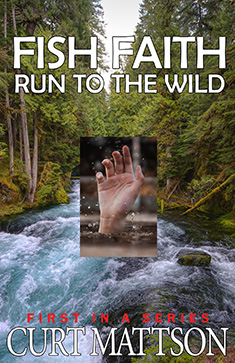
Larry was just coming around some boulders to view a previously unrevealed stretch of river when a combination of a large sunken tree trunk and a sudden hole made him lose his footing. He immediately went under as if the force of gravity was stronger in that spot. His pack suddenly felt a hundred pounds heavier as it filled with the rushing water. He was swept, back-first, against the elephant-sized rock he had just rounded a moment earlier. When he hit, the remainder of his breath was knocked out of him. He went under again. This time, he lost his grip on his pole, and the pack came loose from one shoulder. That only made it serve as a sea anchor of sorts, dragging him farther downstream. When Larry’s lungs seemed about to burst, his head suddenly bobbed above the surface, just long enough to grab a breath, and then he was spun round in another eddy of ice-cold water. Totally unprepared for the onslaught, he felt so disoriented that he couldn’t even tell which way was upstream and which was down.
He did, however, realize that his pack was now gone, having been torn from his other shoulder, and his waders were completely filled with water. He was being dragged headlong directly downstream, with his head, shoulders, and back exposed to every stone jutting up from the bottom along the way. He had already taken a glancing blow to the head and left shoulder, and his ear burned with searing pain. He also figured at least one rib had already cracked . . . and felt a jagged pain in his right buttock. He was somehow able to reach down to inspect that injury—only to discover he was touching torn flesh instead of the rubber of his waders or the denim of his jeans.
The downward rush seemed to go on for hours. His arms flailed helplessly, trying to fend off rocks and logs like some has-been prizefighter facing his last opponent. Larry cursed himself for even thinking of this stupid trip. At this moment, he should have been home mowing his lawn like every normal, sensible man his age. Instead, he was frozen, wet, wounded, and rushing toward what looked like certain death by a concussion, loss of blood, drowning, or all three. Yet he miraculously tumbled onward—or downward. Was he rounding a bend? How long was this river?
Is there no bottom? . . . no bank? . . . nothing to grab onto? He wanted to shout out loud, but his mouth kept filling with the icy water. His core was starting to get numb. What would it feel like to die? Would he just go to sleep? Would he just float away? Merrily, merrily, merrily, merrily, life is but a dream.
But his body screamed back at him: “Keep fighting!” He fended off another boulder but then immediately whirled and flipped in the twisting current. He felt certain this was it. Then the sun flashed in his eyes, and his face was above water again.
Headfirst.
Feetfirst.
He couldn’t control the spin. He didn’t know which part of his body to protect. Larry spun once more and felt something hook his leg under the water. The last thing he remembered was a thudding pain in his head, his teeth clacking violently together. Then a blinding flash of morning sun through the trees and the scene went black.